





How can red light therapy help relieve contact dermatitis?
Red light therapy cannot cure contact dermatitis, but it is an excellent tool for managing symptoms. Red light therapy can be a beneficial tool to help speed up healing as well as soothe inflammation and irritation from contact dermatitis which occurs when skin comes into contact with an allergen or irritating substance.
IN THIS ARTICLE
- 01 What Is Contact Dermatitis?
- 02 What Is the Science Behind Red Light Therapy?
- 03 How Can Red Light Therapy Be Used to Soothe Contact Dermatitis?
- 04 Is Red Light Therapy Safe for Sensitive Skin?
- 05 What Are the Benefits of Using Red Light Therapy on Dermatitis?
- 06 What Are the Risks of Using Red Light Therapy On Contact Dermatitis?
- 07 Which LED Light Therapy Wavelengths Work Best For Contact Dermatitis?
What Is Contact Dermatitis?
Contact dermatitis is actually a type of eczema. It’s characterized by itchy, inflamed skin that has come into contact with an allergen or irritant. Think of it as an allergic reaction. There are two main categories of contact dermatitis: Allergic contact dermatitis and irritant contact dermatitis. Irritant contact dermatitis is the more common of the two and occurs when skin comes into contact with harsh chemicals, soaps, or substances. Allergic contact dermatitis is an allergic reaction when your immune system responds to an allergen like fragrance, laundry detergents, latex, or even certain metals in jewelry.
What Is the Science Behind Red Light Therapy?

Red light therapy (RLT) is a skincare treatment that aims to reduce fine lines and wrinkles, boost collagen, and calm inflamed skin. Infrared and near-infrared light (which have their differences) are used to penetrate the skin to soothe and target various concerns ranging from blemishes and fine lines to inflammation and wound healing. Particularly for wound healing, RLT can help by penetrating at a cellular level to improve mitochondrial health which ultimately helps the cells to speed up tissue repair. According to a study, “low-level exposure to 980 nm laser light can accelerate wound healing in vitro without measurable temperature increases.” While it’s most commonly known for its skincare benefits and popular at-home devices like the LumaLux Face Mask, RLT has also been known to aid in other areas such as wellness and might even help with issues like migraines.
How Can Red Light Therapy Be Used to Soothe Contact Dermatitis?
Contact dermatitis is an allergic reaction to either an allergen or irritant, it’s common for the area to become itchy, red, and inflamed. Red Light Therapy can be used to minimize the inflammation, soothe itchy skin and even address redness. Near-infrared light waves penetrate deeper and will be better for inflammation reduction as well as any wound healing that arises because of the contact dermatitis. One study showed that RLT use led to “90 percent reduced redness post skin resurfacing using non thermal dual wavelength - blue (405-420nm) and near infrared (850-900 nm)” which shows that near-infrared light can help with issues such as redness. Not only this, but RLT can also help to strengthen the skin barrier which can aid in the management of contact dermatitis symptoms, since a compromised barrier is more easily irritated and inflamed.
Is Red Light Therapy Safe for Sensitive Skin?
One of the best things about red light therapy is that it is generally safe to use and has little to no side effects when done properly. Red light at 630 to 660 nm is great for sensitive skin. One of the best things about RLT is that it’s pain free, non-invasive, and supports skin health. However, with sensitive skin and in general overuse can lead to irritation or increased skin sensitivity especially if your skin is already reactive or sensitive. So, it’s always best to follow instructions and protocol.
What Are the Benefits of Using Red Light Therapy on Dermatitis?

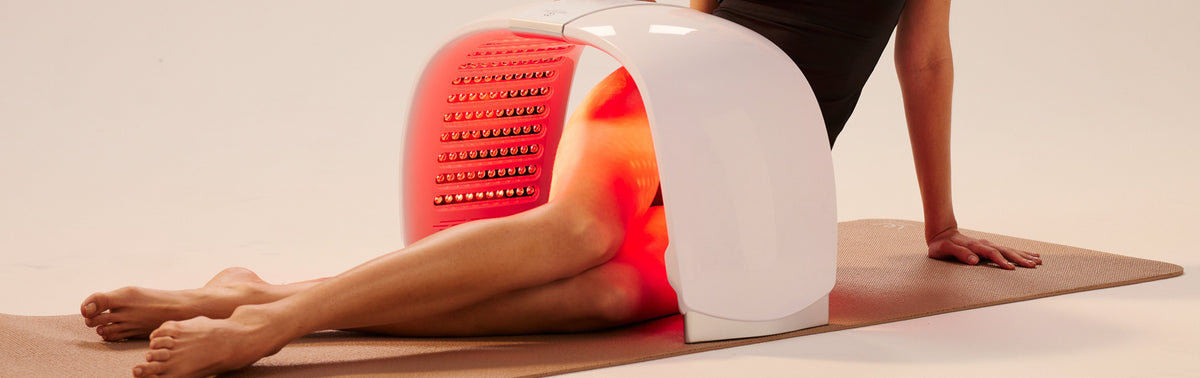
Although red light therapy doesn’t cure contact dermatitis, it can be helpful for easing and managing symptoms, and there are several benefits to incorporating RLT—especially with devices like the LumaLux Face Neck and Dec and the LumaLux Dome Face and Body when dealing with contact dermatitis.
-
Accelerates wound healing
-
Minimizes inflammation
-
Helps with pain relief
-
Soothes itchy skin
-
Improves skin density
-
Improves skin barrier
-
No downtime
-
Good for sensitive skin
What Are the Risks of Using Red Light Therapy On Contact Dermatitis?
Although red light therapy is touted as having minimal downtime and side effects, there are still a few things to be cautious about when using it to help with contact dermatitis. If contact dermatitis is actively flared up, then red light therapy can potentially worsen irritation. Additionally, overuse can oftentimes worsen the symptoms of contact dermatitis, cause thermal injury, and dry the skin out. So, it’s best to avoid RLT use during the peak of a contact dermatitis flare up. However, the likelihood of overusing a cleared at-home RLT device is rare, but it’s still recommended to follow manufacturer instructions.
Which LED Light Therapy Wavelengths Work Best For Contact Dermatitis?

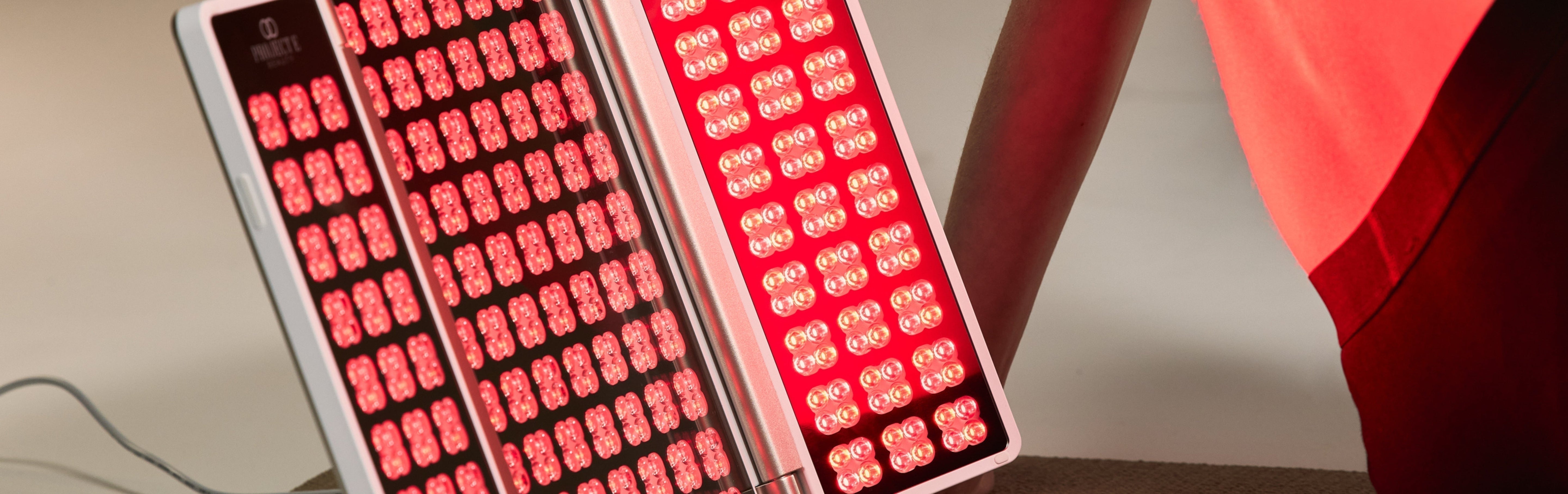
To understand how to best approach RLT and contact dermatitis, you need to know the differences in wavelengths. Red light has wavelengths of 630 to 660 nanometers, it’s visible to the eye, and treats the surface of the skin. Near-infrared light emits wavelengths of 810 to 850 nanometers, is not visible to the naked eye, and penetrates the skin tissue, muscles, and bones. For example, the settings on the Alora Age Renewal LED Panel offer deep cellular penetration and the LumaLux Face + Pro LED Red Light Therapy Face and Neck Mask levels things up more with deep infrared light therapy (1072nm). Therefore, each of these accomplishes different goals. Red light is great for more sensitive skin, promotes faster wound healing, eases inflammation and soothes itchiness. Near-infrared light targets deeper tissue inflammation and can help with pain relief, wound healing, and cell health. So ideally a combination of the two could work for addressing the various symptoms associated with contact dermatitis. Essentially, red light therapy cannot cure contact dermatitis, but it is a great tool for managing symptoms.
Here’s How to Use RLT to Managing Contact Dermatitis Symptoms
-
Make sure your RLT device is clean before use
-
Check that your contact dermatitis isn’t in the worse stages of a flare up
-
Use a mild cleanser (make sure there are no active ingredients or irritants like fragrance, AHAs or BHAs in your soap)
-
Use your preferred RLT device per its instructions
-
Use a gentle, fragrance free moisturizer on the area to soothe dryness and restore the skin barrier
-
Keep the area protected and covered

LumaLux Face | Pro LED Red Light Therapy Mask
Our most advanced LED mask for deeper skin renewal - fine lines, acne, hyperpigmentation, skin texture

Alora | Age Renewal LED Light Therapy Panel
Target up to 5 skin layers with advanced blue, infrared and red light therapy contour panel




Leave a comment
This site is protected by hCaptcha and the hCaptcha Privacy Policy and Terms of Service apply.